


Xiaomi HyperOS 4 Update: Xiaomi has announced a major rollout plan for HyperOS 4, bringing its latest software experience to smartphones, tablets, smart TVs, wearables, and smart home devices.
The rollout will take place in multiple phases. Xiaomi’s currently announced stable timeline applies to the Chinese market, while the company has also started its global HyperOS 4 beta program. Therefore, the China schedule provides a useful indication of the rollout order, but it should not be treated as the confirmed release date for India or other global markets.
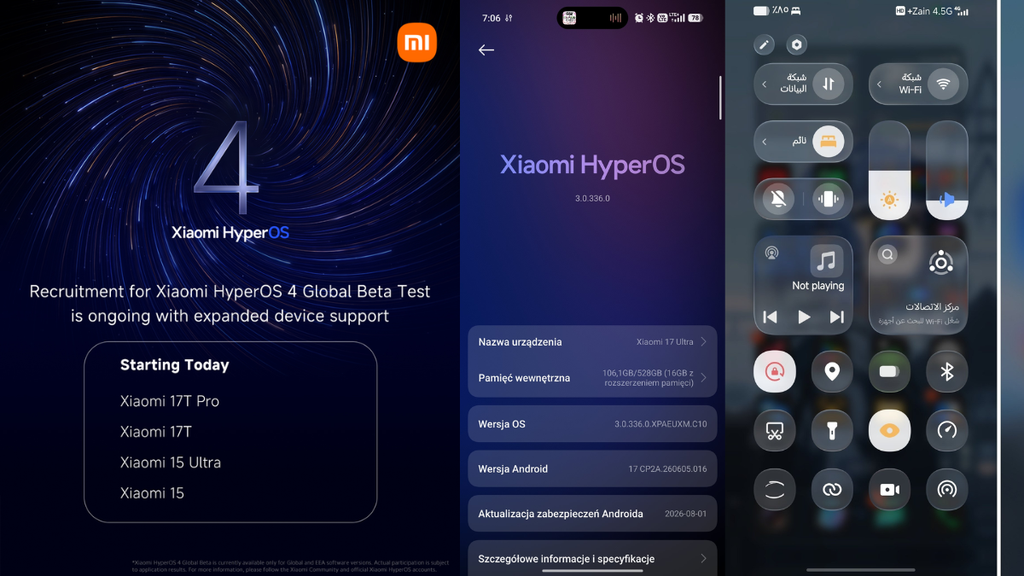
The first phase is scheduled to begin in October 2026, with Xiaomi’s newest flagship smartphones and tablets receiving the update first. The smartphone and tablet rollout is expected to continue through December 2026, followed by a broader smart-home rollout in January 2027.
Here’s everything you need to know about the Xiaomi HyperOS 4 rollout.
Xiaomi HyperOS 4 Release Date
The stable HyperOS 4 rollout in China is scheduled to begin on October 15, 2026.
The first devices expected to receive the update include the Xiaomi 17 series, Redmi K90 series and Xiaomi Pad 8 series.
Xiaomi will then gradually expand the rollout to older flagship smartphones, Redmi devices and tablets throughout November and December.
Global and Indian users should note that China’s rollout dates are not the official India release dates. Xiaomi may follow a different schedule for Global, EEA and Indian ROMs.
HyperOS 4 Phase 1: Starting October 15
The first wave will focus on Xiaomi’s newest flagship devices.
Xiaomi Phones
- Xiaomi 17
- Xiaomi 17 Pro
- Xiaomi 17 Pro Max
- Xiaomi 17 Ultra
- Xiaomi 17 Ultra Leica Edition
Redmi Phones
- Redmi K90
- Redmi K90 Pro Max
- Redmi K90 Pro Max Champion Edition
- Redmi K100 Pro
- Redmi K100 Pro Max
Xiaomi Tablets
- Xiaomi Pad 8
- Xiaomi Pad 8 Pro
These devices are expected to be among the first to receive the stable HyperOS 4 update in China.
HyperOS 4 Phase 2: By October 31
By the end of October, Xiaomi is expected to expand HyperOS 4 to additional smartphones and tablets.
The second phase includes devices such as:
- Xiaomi 17T
- Xiaomi 17T Pro
- Redmi Turbo 5
- Redmi Turbo 5 Max
- Redmi K Pad 2
Some Xiaomi television models are also expected to enter the HyperOS 4 rollout during this phase.
HyperOS 4 Phase 3: By November 15
The November rollout will bring HyperOS 4 to several previous-generation flagship smartphones.
Expected devices include:
- Xiaomi 15
- Xiaomi 15 Pro
- Xiaomi 15 Ultra
- Xiaomi 15S Pro
- Xiaomi MIX Flip 2
- Xiaomi Civi 5 Pro
- Redmi K80
- Redmi K80 Pro
- Redmi K80 Ultra
- Redmi Turbo 4
- Redmi Turbo 4 Pro
- Xiaomi Pad 7
- Xiaomi Pad 7 Pro
- Xiaomi Pad 7 Ultra
- Xiaomi Pad 7S Pro
This phase is particularly important for users who purchased Xiaomi’s 2025 flagship and premium devices.
HyperOS 4 Phase 4: By November 30
By the end of November, Xiaomi is expected to extend the update to additional Redmi Note smartphones and tablets.
The expected devices include:
- Redmi Note 17
- Redmi Note 17 Pro
- Redmi Note 15
- Redmi Note 15 Pro
- Redmi Note 15 Pro+
- Redmi Pad 2 Pro
- Redmi Pad 2 Pro 5G
- Xiaomi TV S Mini LED series
- Redmi TV X series
Xiaomi HyperOS 4 Update in December 2026
December is expected to be one of the biggest phases of the HyperOS 4 rollout.
Several older Xiaomi flagship phones, Redmi smartphones and tablets are expected to receive the update during this period.
Xiaomi Smartphones
- Xiaomi 14
- Xiaomi 14 Pro
- Xiaomi 14 Ultra
- Xiaomi 13
- Xiaomi 13 Pro
- Xiaomi 13 Ultra
- Xiaomi MIX Fold 3
- Xiaomi MIX Fold 4
- Xiaomi MIX Flip
- Xiaomi Civi 4 Pro
- Xiaomi 14 Civi
Redmi Smartphones
- Redmi K70
- Redmi K70E
- Redmi K70 Pro
- Redmi K60 Extreme Edition
- Redmi Turbo 3
- Redmi Note 14 5G
- Redmi Note 14 Pro
- Redmi Note 14 Pro+
- Redmi Note 13 5G
- Redmi Note 13 Pro
- Redmi Note 13 Pro+
- Redmi 13 5G
- Redmi 13C 5G
- Redmi 14C 5G
The exact availability can vary depending on the market and software version.
Xiaomi Tablets Getting HyperOS 4
Xiaomi is also bringing HyperOS 4 to a wide range of tablets.
Devices expected to be included in the rollout include:
- Xiaomi Pad 6S Pro 12.4
- Xiaomi Pad 6 Max 14
- Redmi Pad 2
- Redmi Pad SE
- Redmi Pad SE 8.7
- Redmi Pad SE 8.7 4G
Tablet users can expect the update to arrive in stages rather than all at once.
Xiaomi Watch and Wearables HyperOS 4 Update
HyperOS 4 is not limited to smartphones and tablets.
Xiaomi is also preparing updates for selected smartwatches and wearable devices.
The rollout is expected to include models such as:
- Xiaomi Watch S4
- Xiaomi Watch S3
- Redmi Watch 6
- Xiaomi Smart Band 10 series
The availability and timing may vary by region and device variant.
Xiaomi Smart TVs and Smart Home Devices
Xiaomi’s HyperOS ecosystem extends beyond phones and tablets.
The company is also preparing HyperOS 4 updates for selected Smart TVs, smart speakers and smart home displays.
Expected devices include:
Smart TVs
- Xiaomi TV S Pro Mini LED series
- Xiaomi TV S Mini LED series
- Redmi Smart TV X series
- Redmi TV MAX
- Redmi TV A Pro series
Smart Speakers
- Xiaomi Sound Pro
- Xiaomi Sound
- Xiaomi Sound Move
- Xiaomi Xiaoai Speaker Pro
- Xiaomi Xiaoai Speaker
Smart Home Displays
- Xiaomi Smart Home Display 6
- Xiaomi Smart Home Display 10
The broader smart-home rollout is expected to continue into January 2027.
What Is New in HyperOS 4?
HyperOS 4 is designed as a major evolution of Xiaomi’s software ecosystem.
Xiaomi has highlighted three major areas for the new version:
- Effortless Performance
- Effortless Aesthetics
- Effortless Interaction
The company is also focusing on improvements through HyperCore and new AI-powered capabilities under HyperAI.
HyperOS 4 is expected to bring improvements to system performance, memory management, visual design and AI-powered features.
However, not every feature will necessarily be available on every Xiaomi device. Feature availability can depend on the device model, region, language and software version.
When Will Xiaomi HyperOS 4 Arrive in India?
This is one of the biggest questions for Xiaomi users in India.
At the moment, Xiaomi’s announced stable rollout schedule is primarily for China. The company has already started its global HyperOS 4 beta program, but the final stable India rollout dates may vary by device.
Indian users should therefore avoid assuming that an October 15 China release means their Global or Indian variant will receive the update on the same day.
Once Xiaomi announces the official India rollout schedule, users will have a clearer idea of when their specific device will receive HyperOS 4.
How to Check for the HyperOS 4 Update
If you own a compatible Xiaomi, Redmi or POCO device, you can manually check for a software update.
Go to:
Settings → About phone → Xiaomi HyperOS → Check for updates
If the update is available for your device and region, the OTA update option should appear there.
It is recommended to keep the phone connected to Wi-Fi and ensure the battery has sufficient charge before installing a major system update.
Will Your Xiaomi Phone Get HyperOS 4?
The easiest way to determine eligibility is to check Xiaomi’s official rollout information for your specific region and model.
A phone appearing on the China HyperOS 4 list does not automatically confirm that the same Global or Indian variant will receive the update on the same date.
This is particularly important for Redmi and POCO devices, because the names and software versions can differ between China and international markets.
Xiaomi HyperOS 4 Liquid Glass 👀 #Xiaomi #HyperOS pic.twitter.com/CCYIT4viPk
— Tech Home (@TechHome100) July 24, 2026Xiaomi HyperOS 4 Rollout Timeline at a Glance
| Timeline | Expected Rollout |
|---|---|
| October 15, 2026 | Xiaomi 17 series, Redmi K90 series, Xiaomi Pad 8 series |
| October 31, 2026 | Additional Xiaomi and Redmi smartphones, tablets and TVs |
| November 15, 2026 | Xiaomi 15 series, Redmi K80 series, Xiaomi Pad 7 series |
| November 30, 2026 | Redmi Note series, Redmi tablets and selected TVs |
| December 2026 | Older Xiaomi/Redmi smartphones, tablets and wearables |
| January 2027 | Selected Smart TVs, speakers and smart home devices |
Final Verdict
Xiaomi HyperOS 4 is shaping up to be a major ecosystem-wide update, covering smartphones, tablets, wearables, Smart TVs and connected home products.
The China rollout is scheduled to begin on October 15, 2026, with newer flagship devices receiving the update first. The rollout will then expand to older Xiaomi and Redmi devices through November and December, while selected smart-home products are expected to follow in January 2027.
For users in India and other global markets, the China schedule should be viewed as a rollout reference rather than a confirmed local release calendar. Xiaomi’s Global beta program is already underway, and official regional stable-release dates should provide the final confirmation for each device.
If you own a Xiaomi, Redmi or POCO phone, it is worth checking the official update page regularly because OTA availability can vary by model, region and software version.

